Tell us about the job
Takes about a minute. No obligation.
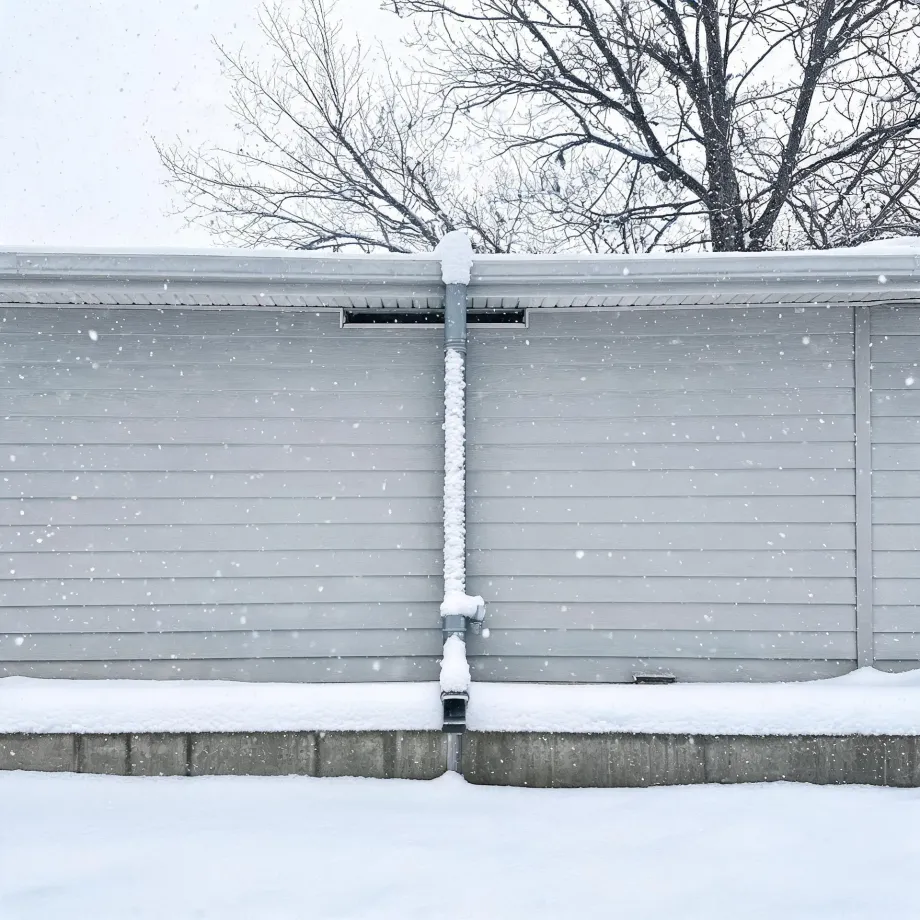
Sizing a heat pump for Chittenden County means sizing it for a long stretch of cold, not for the shoulder months. Homes in Chittenden County, VT run heat about nine months a year, from September through May. As outdoor temperatures drop, a heat pump's capacity drops with them, and the refrigerant circuit, the reversing valve, and the defrost controls carry that load across most of the calendar. A contractor has to establish the building's heat loss and confirm whether backup resistance heat is wired before they can quote a system that will actually hold. An undersized unit will run at its limits through the coldest months and wear its components faster than the installation paperwork would suggest.
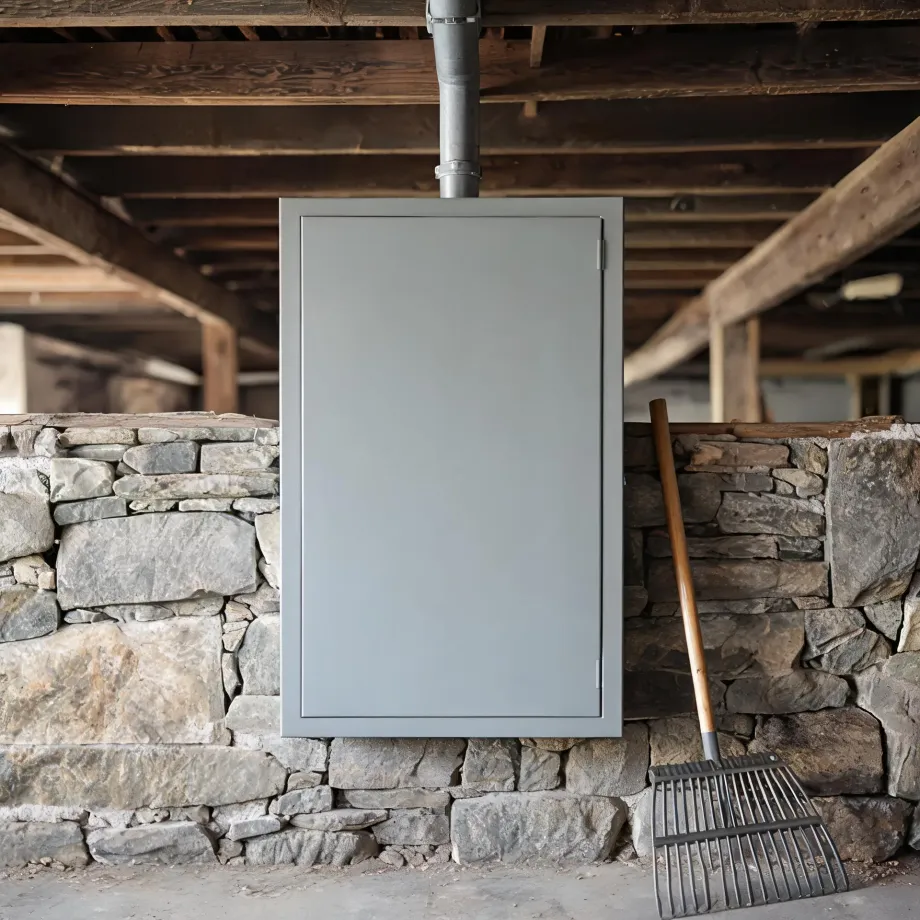
Ductwork laid out for an older system shapes what a heat pump installation actually costs here. Half the homes in Chittenden County, Vermont were built in 1981 or earlier (2020-2024 ACS 5-year). Contractors working in this stock regularly find that runs were sized for equipment with different airflow requirements, and that routing decisions made for a previous system leave the new one with a poor fit. The electrical panel tells a similar story: service sized for what the house once needed may not carry the load a heat pump draws. A contractor pricing the job has to open the walls and read the panel before the equipment choice is settled.
What a Heat Pump Installation Puts in Your Home
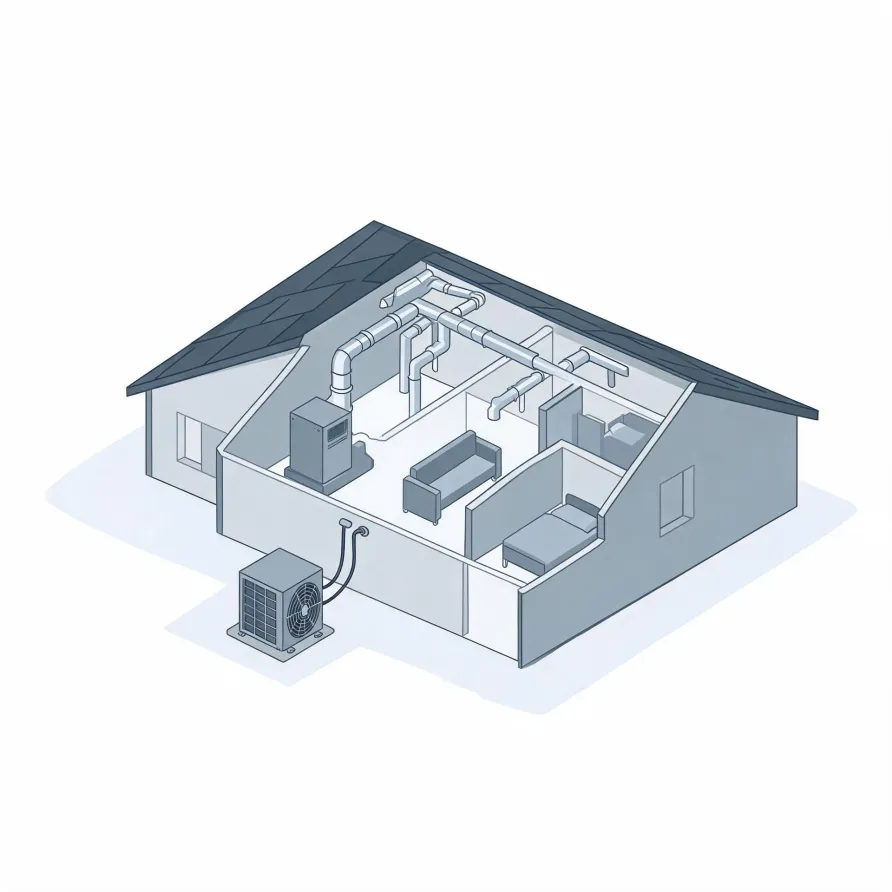
The outdoor unit sits on a pad or bracket outside the house and holds the compressor and coil that do the core work of the system. Inside, an air handler or indoor unit mounts on a wall or in a mechanical space and moves conditioned air into the living area. Together these two units carry the full load of heating and cooling.
A refrigerant line set runs between the outdoor and indoor units, and a condensate drain line carries moisture out of the indoor unit. A thermostat or control panel mounts on an interior wall and lets the occupant set temperatures and switch between modes. Each of these pieces has a fixed location that a contractor determines during the installation visit.
The drawing alongside shows a typical layout, and a licensed contractor will assess which configuration and placements suit this particular house.
Find a contractor in Chittenden CountyChittenden County, by the numbers
196 severe weather events were recorded in Chittenden County, Vermont between 2015 and 2024.
NOAA National Centers for Environmental Information, Storm Events Database, bulk CSV export, events 2015-01-01 through 2024-12-31.Half the homes in Chittenden County, Vermont were built in 1981 or earlier (2020-2024 ACS 5-year).
U.S. Census Bureau, 2020-2024 American Community Survey 5-Year EstimatesChittenden County, Vermont holds 74,888 housing units (2020-2024 ACS 5-year).
U.S. Census Bureau, 2020-2024 American Community Survey 5-Year EstimatesOwners occupy 63.9% of the occupied homes in Chittenden County, Vermont (2020-2024 ACS 5-year).
U.S. Census Bureau, 2020-2024 American Community Survey 5-Year EstimatesRules & Standards for Heat Pump Installation in Chittenden County, Vermont2 sourced rules and standards
Licensing Rules for Chittenden County, Vermont
Vermont splits the trade across two specialty licences and a contractor may hold one without the other: field A1 covers automatic gas or oil heating including geo-thermal and ground source heat pumps, and field C3 covers refrigeration or air conditioning including air-to-air heat pumps.
Vermont reaches HVAC work through its electricians’ licence rather than an HVAC licence, and the requirement stops at the front door of a house: anyone performing electrical work in Vermont must be licensed as an electrician unless the work is in a residential building containing two or fewer dwelling units.
Severe Weather Events in Chittenden County
Extreme weather puts a direct load on heating and cooling equipment, and how hard a heat pump works over its life is shaped by the conditions it faces. What happens in Chittenden County is what the equipment here is sized and installed to handle.
196 severe weather events, 2015–2024. Source: NOAA National Centers for Environmental Information, Storm Events Database.