Profile view of a bearded man wearing a dark baseball cap and a dark gray T-shirt against a plain off-white background.

Why your heat pump bill jumps in a Vermont winter

Step 1 of 3: Equipment

Why did my heat pump bill jump this winter in Vermont?

You turn the heat pump on and it runs most of the day without the house feeling any warmer, and then the bill shows up higher than you expected. You're used to catching small problems before they turn into big ones, so you want to know what's actually driving the jump before you assume the unit itself is failing.

Below a certain temperature, your heat pump works harder for the same warmth

A heat pump moves heat from outside air into your house, and the colder that air gets, the less heat there is to move and the harder the unit has to run to make up the difference. On a cold Vermont night, it may run close to nonstop just to hold the temperature you set, even if nothing is wrong with it. Since most homes here heat with oil, you may not have another system backing up the heat pump when it struggles, so it keeps running on its own through the coldest stretches. With power rates among the highest in the country, those extra running hours show up fast on the bill. A sudden jump can also point to something fixable, like a struggling defrost cycle or a system low on refrigerant.

A gray outdoor condenser unit on a concrete pad beside a house with stacked stone and horizontal siding, surrounded by gray gravel and a plain light wall.

Why cold air costs more to move

A heat pump pulls warmth from outside air and carries it into your house. At 30 degrees that's manageable. Below 10, there's a lot less heat out there to grab, so the system has to run longer and work harder to pull the same warmth inside. Below 5, some units lean on a backup electric strip to keep up, and that strip pulls far more power than the heat pump itself. That's often the real source of a bill jumping, not a broken part.

A dark gray outdoor heat pump unit sits on a concrete pad beside a white stucco wall and lap-sided house corner, with mulch and a small shrub in the foreground.

What a frozen coil tells you

Check the outdoor unit after a cold stretch. Some frost in winter is normal, the system defrosts itself on a cycle. But if the coil is caked in ice or snow is packed around the base, it can't pull heat from the air at all, and it'll run constantly trying. A defrost cycle that isn't kicking in, or a fan that's iced up, turns a normal Vermont winter into a bill you can't explain. That's worth having a contractor look at before the next cold snap.

Is this just a cold snap, or is something wrong?

A single cold week driving up the bill is normal. What's worth a second look is if the outdoor unit is caked in ice past the coil, if you hear it clicking on and off every few minutes instead of running steady, or if one room stays cold no matter how long the system runs. Those point to a problem on top of the cold, not the cold itself. Left alone, the unit may lean on its backup heat strips to keep up, and those pull a lot more power than the compressor does. That's often where the real jump in the bill comes from, not the outdoor temperature at all.

A gray outdoor condenser unit sits on a concrete pad against a house wall with horizontal siding above a stone veneer base, with an electrical disconnect box and conduit on the wall and a leafy shrub in mulch to the left.

Running the way it should

This is what a heat pump looks like when it's keeping up. The coil is clear, the fan turns without strain, and the unit cycles on and off instead of running flat out. A unit working this way costs more to run in January than July, but the jump stays in line with the cold.


An outdoor air conditioner condenser unit on a concrete pad beside a house with horizontal siding above a concrete block foundation, with insulated refrigerant lines and a vertical white pipe on the wall.

Running into trouble

Weathering like this doesn't cause a high bill by itself, but it's often sitting next to what does. A worn unit draws more power to move the same heat, and refrigerant lines running along an old foundation are worth a look if the line insulation has worn through.

A bearded man in a plaid flannel shirt stands indoors looking out a frost-covered window, with a steaming dark blue mug on the wooden sill and snow-covered trees outside.
A smiling man in a dark blue T-shirt sits on a light gray sofa in a living room with a wooden shelf and window behind him, with a laptop edge visible in the foreground.

Get your heat pump to the right pro

A heat pump that's icing up or short cycling isn't going to fix itself by March, and every week it runs that way is another week on a power bill that's already among the highest in the country. In Vermont, where oil has been the fallback for so many houses, a heat pump that's struggling can end up costing more than the system it replaced, and that gap only grows the longer a bad defrost cycle or a low charge goes unchecked. You don't need to know whether it's the reversing valve or a sensor that's off. You just need someone who can get the unit back to running the way it did when the bill made sense. Checking an outdoor unit yourself in January isn't worth the trouble, and waiting it out just means paying for a problem instead of a fix. Sending this off means that part of the work is no longer yours to carry.

Running on the backup strip

Most heat pumps in Vermont have electric resistance heat built in as backup for the coldest stretches. It's there for the mornings when the outdoor temperature drops low enough that the heat pump alone can't keep up with the heat loss in your house. That backup heat doesn't work the way the heat pump does. It doesn't move heat from outside, it generates it directly, the way a toaster does, and it uses far more electricity to put out the same warmth. If your thermostat has an auxiliary or emergency heat light and it's been on more than it used to, that's likely where the jump in your bill is coming from.

What keeps it from kicking on so often

A heat pump that's clean and charged right leans on the backup strip less, even on the coldest days. A dirty outdoor coil or a system running low on refrigerant can't pull as much heat from the air, so the backup heat fills in more of the gap, and more of your bill shifts onto the most expensive way to heat the house. Vermont's winters are going to push the backup heat into use sometimes no matter what. The question is whether it's filling in for a few hours during a cold snap or running for most of the day because the heat pump itself isn't pulling its weight.

A woman in a cream cowl-neck sweater sits by a window with snow outside, in a dimly lit living room with a sofa, lit lamp, mirror, candles and a fireplace.
A woman in a gray turtleneck sweater sits beside a large window looking out at snow-covered evergreen trees, in a dimly lit living room with a lit fireplace, lamps, couch and houseplant.
A woman in a cream turtleneck sweater stands beside a large window with snow-covered ground and bare trees outside, in a dimly lit living room with lamps, a sofa and framed art.
A woman in a grey cowl-neck sweater stands indoors near a window, looking out at falling snow, with a lamp, framed picture and couch in the warmly lit room behind her.
A gray outdoor condenser unit sits on a concrete pad beside a house with horizontal lap siding, with a wall-mounted disconnect box and refrigerant lines, mulched beds and a shrub nearby, and a concrete walkway in the foreground.

Clean and clear

The coil is visible and free of grime, the mulch bed around the pad is tidy, and the conduit to the disconnect box is intact. A unit kept like this pulls heat from the outside air without extra strain, which keeps the bill tied to the weather instead of the equipment.

An outdoor air conditioning condenser unit with dusty coils sits on a concrete pad against light horizontal siding, with an electrical disconnect box and refrigerant lines on the wall and a shrub and mulch at left.

Dirty and strained

Years of grime cover the coil and the cabinet, and the ground around the pad is bare dirt instead of mulch. A coil caked like this can't pull heat from the air as well, so the unit runs longer to make the same warmth, and that extra runtime shows up on the bill.

An outdoor air conditioning condenser unit on a concrete pad beside a house with horizontal lap siding, with a green shrub to the left and a wide concrete slab in the foreground.
Before you get your heat pump repair
A gray outdoor condenser unit on a concrete pad beside a light-colored horizontal-siding house, with a disconnect box and refrigerant line on the wall, ornamental grasses and a shrub in mulch nearby, and a concrete patio in the foreground.
After you get your heat pump repair

Still icing up next week

The frost comes back, the strip heat keeps picking up the slack, and the bill keeps climbing. Nothing about the setup changes until the unit itself does.

Request a pro

One visit, one answer

A contractor looks at the coil, the defrost cycle, and the charge, and tells you what's actually driving the number on your bill.

Request a pro

Power costs 22.79 cents per kilowatt-hour statewide

At that rate, every extra hour your heat pump runs on strip heat instead of its normal cycle shows up fast on the bill. A unit that's icing up or short cycling is burning more of those expensive kilowatt-hours than it needs to.

EIA-861 2025 statewide residential average

A heat pump that ices up or short cycles in January isn't going to sort itself out before spring. Whatever's behind it, a low charge, a defrost control that's stuck, a dirty coil, stays there until someone opens the unit up and looks. The bill will keep reflecting it either way, going up a little more each cold week it runs that way instead of the way it should. You already know not to let a small problem sit, and this is that kind of problem: catchable now, cheaper now. Once you send the form, you're done hunting for who to call. A contractor who covers your part of Vermont gets your information and reaches out, and from there it's a conversation about what they found, not another search. That's the part that's off your plate the moment you submit it.

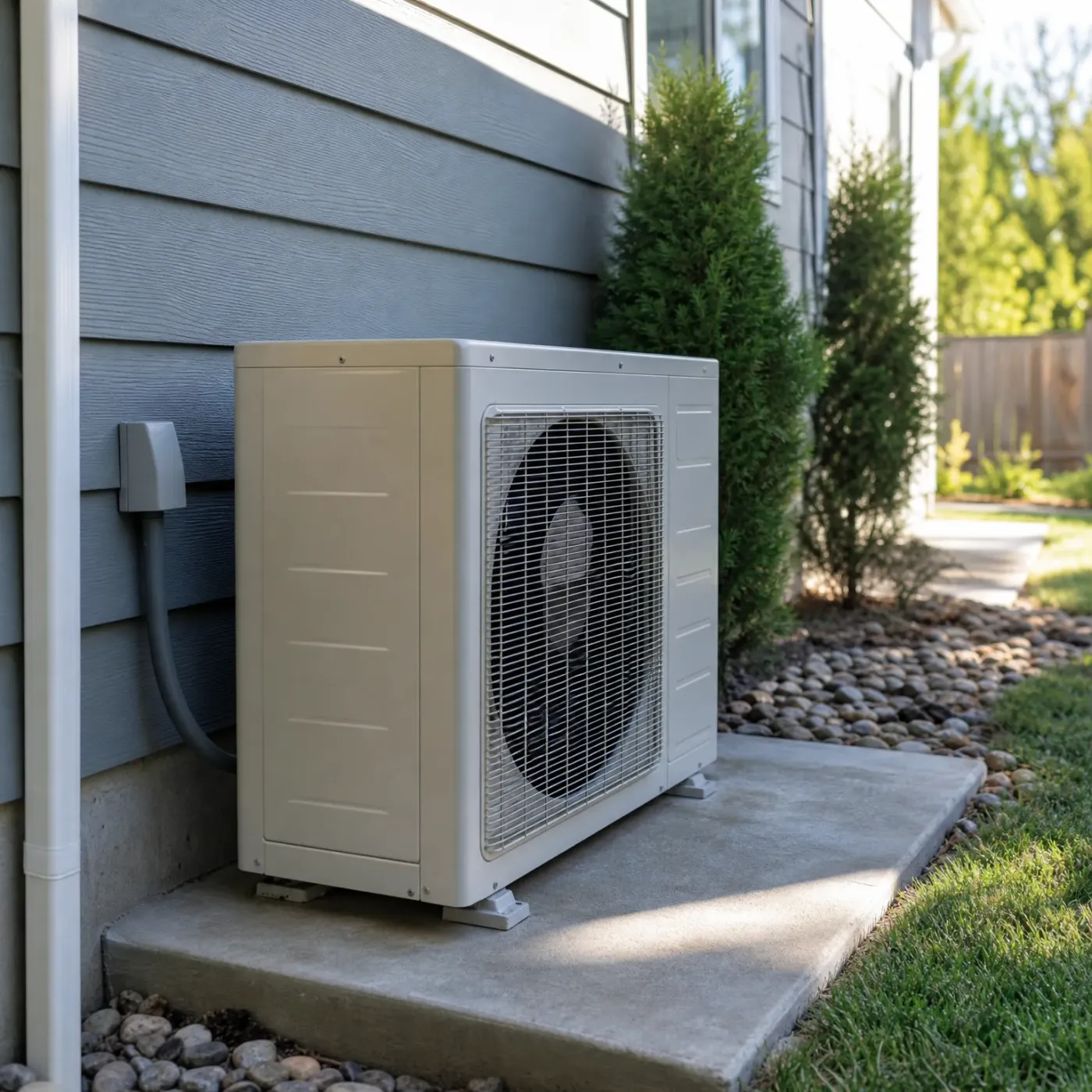
A beige outdoor heat pump or air conditioner condenser unit on a concrete pad beside a gray horizontal-siding house, with a disconnect box and conduit on the wall, shrubs, river rock and lawn nearby.

Matched to your heat pump job

Hand off my repair

Send the request and finding a pro stops being your problem.

You only hire the pro if you want to.