










Is a cold-climate heat pump worth it in Vermont

Send the form and the search for an installer is over.

Step 1 of 3: Equipment

Yes, for most Vermont homes. A cold-climate heat pump is built to keep pulling heat out of outdoor air well below freezing, down to around negative 15 degrees or lower depending on the model, and it keeps working on the coldest nights of the year here. The payoff is biggest if your home heats with oil now. Oil costs more per unit of heat than a heat pump moving the same heat indoors, even with Vermont's electric rates among the highest in the country, because a heat pump produces several units of heat for every unit of electricity it uses. Most homes keep a backup source for the deepest cold snaps, since even a cold-climate unit loses some capacity as the temperature drops. The honest case for installing one is lower heating costs across the winter, not a system that never dips below its rated output.

A two-story house with light beige horizontal siding, a gabled roof, a small covered front porch with dark door, and shrubs along the foundation, set behind a mown lawn and wet sidewalk with large leafy trees on both sides.

A 59°F dew point is about as high as Vermont summers get, which is to say they don't get that sticky. NOAA's averages put June, July and August there. Your heat pump isn't fighting the kind of heavy, waterlogged air that wears on a system further south. Cooling your house back down after a warm afternoon takes less work, and it won't run as long or as hard to pull the moisture out along with the heat. That same system earns its keep in January, when it's doing the opposite job against cold that actually tests it.

NASA POWER T2MDEW county cells weighted by homes

A man in a blue sweatshirt reclines with closed eyes in a brown leather armchair in a living room with a bookshelf, houseplant, sofa, window, and a side table holding newspapers and a dark mug.
A bearded man in a gray pullover reclines with closed eyes on a brown leather sofa in a sunlit room with a window, framed picture, potted plant, and a wooden cabinet holding papers and a dark mug.
A man in a gray sweater leans back with closed eyes in a brown leather armchair beside a wooden side table holding a dark mug and a folded newspaper, with bookshelves and a window seat behind him.
A man in a green sweater reclines in an armchair with his eyes closed and a slight smile, beside a window with plants, a small table holding a mug and folded newspaper, and bookshelves behind him.

A heat pump doesn't make heat the way your oil furnace does. It pulls heat out of the outdoor air and compresses it to a higher temperature, which is why there's no flame or flue to think about. The compressor runs at variable speed, so instead of blasting on and shutting off, it holds steady through a long cold stretch. Every so often the system reverses itself for a few minutes to melt frost off the outdoor coil. If you feel cool air during that cycle, it's not malfunctioning. There's a real limit, though. Past a certain outdoor temperature, the unit can't pull enough heat to keep up with what your house is losing, and something else has to pick up the slack. That's why a lot of Vermont installs leave the oil system in place, wired to take over at the point where it can run cheaper than the heat pump anyway. One more thing worth knowing: the outdoor unit needs to breathe. Snow piled against it or ice over the coil blocks the airflow it depends on.

How a cold-climate heat pump works here

  • A cold-climate heat pump moves heat by compressing refrigerant, not by burning anything, so there's no flame or flue to maintain.
  • Below a certain outdoor temperature the unit's output drops below your home's heat loss, and that's when a backup source has to carry the rest.
  • Many installs pair the heat pump with the existing oil furnace or boiler, letting whichever one runs cheaper at a given temperature take over.
  • A variable-speed compressor adjusts its output instead of switching fully on and off, so it holds a steady indoor temperature in single-digit weather.
  • Defrost cycles briefly reverse the system to clear frost off the outdoor coil, which can make it seem like it's blowing cool air for a minute.
  • The outdoor unit needs clearance from snow buildup, since a buried or iced-over coil can't pull in outdoor air to extract heat from it.
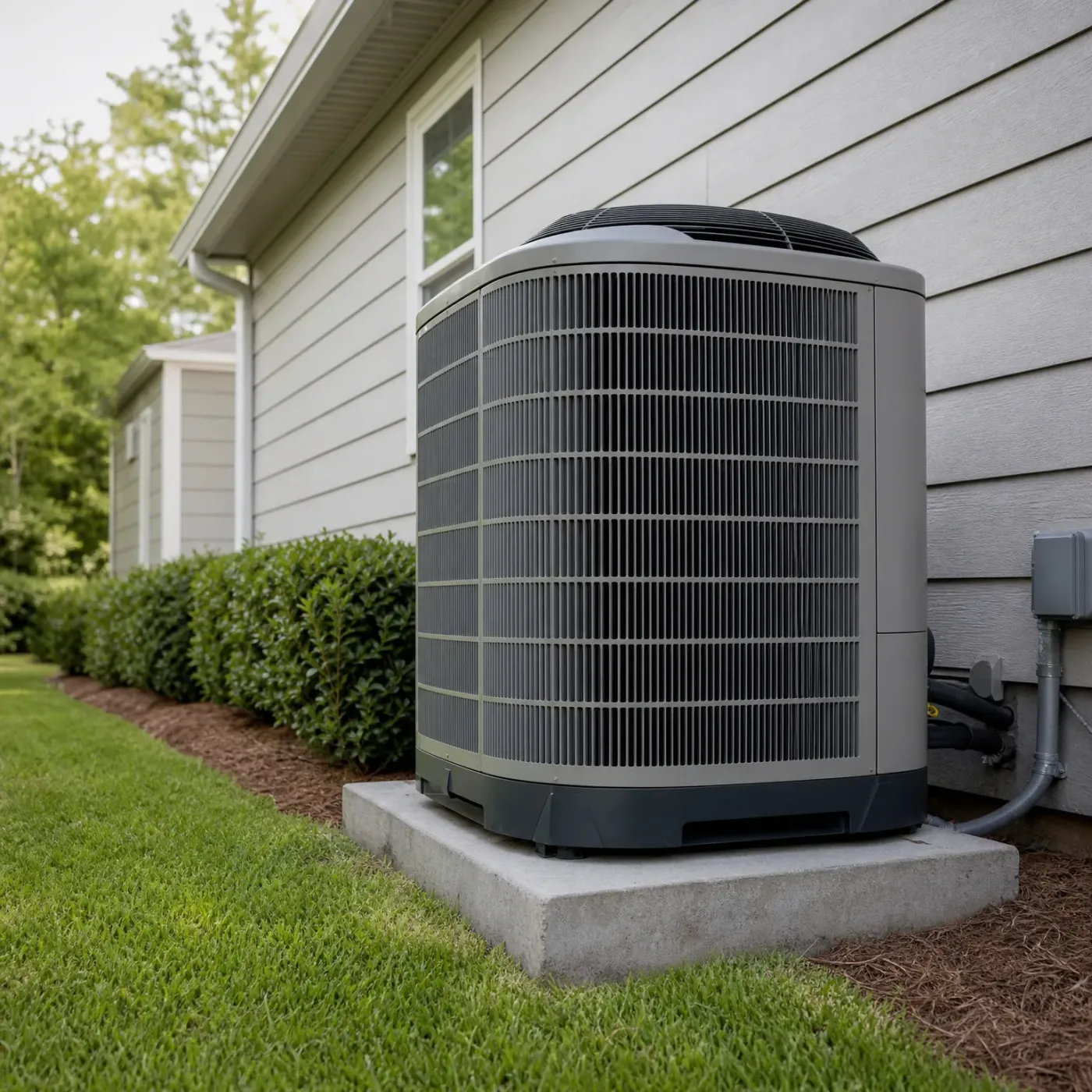
A gray outdoor condenser unit on a concrete pad beside a house with horizontal lap siding, a conduit and disconnect box on the wall, a shrub with white flowers at right and evergreen foliage at left.
Clean coil fins, clear airflow around the cabinet, a disconnect that's easy to reach: the unit pulls its rated heat even on Vermont's coldest nights.
An outdoor air conditioning condenser unit with a top fan grille sits on a concrete pad beside a house with horizontal siding and a concrete step.
Fins caked with dust and debris choke airflow, and the heat pump has to run longer to pull the same heat from the cold air.
  1. Outdoor air passes over a cold refrigerant coil outside

  2. Refrigerant absorbs heat from that air and turns to gas

  3. A compressor squeezes the gas, raising its temperature

  4. An indoor coil releases that heat into your home

Why does your heating bill still worry you in January

If your house still runs on oil, you know the feeling when the truck comes less often than you'd like and the tank gauge drops faster on the coldest weeks. A heat pump changes what you're watching for. Instead of a tank level, you're watching the outdoor temperature and listening for the unit to run longer on the hardest nights, which is normal. What you shouldn't hear is short cycling, where it kicks on and off every few minutes, or feel rooms that stay cold no matter how long it runs. Either one means it's not keeping up, and on the coldest nights that's when a house relying only on the heat pump risks falling behind on heat it can't make up quickly.

A gray-haired man with a beard in a blue button-placket shirt reclines on a couch with his eyes closed, beside a sunlit window with a green plant.
A woman in a cream knit sweater sits in an armchair with her eyes closed near a window showing yellow autumn foliage, with a mug on a round wooden side table beside her.
An outdoor condenser unit on a concrete pad beside a light-colored lap-sided house, with a trimmed hedge, mulch bed and mowed lawn nearby and an electrical box and conduit on the wall.

Send one request and you're done looking

Skip the round of in-home estimates for a new heat pump.

Send the form and stop researching installers for the new heat pump.

Describe it once

There's no charge for the request.

Heat Pump Alone or With Oil Backup

Heat Pump Only

  • Below the unit's low-temperature cutoff, output drops under your home's heat loss and rooms stop keeping pace.
  • You skip the oil truck entirely, which also means no tank to watch and no delivery schedule to plan around.
  • Vermont's electric rates are among the highest in the country, so every kilowatt the compressor draws costs more than it would most other places.
  • Cooling comes built in, and since Vermont summers run without heavy humidity, the unit isn't working as hard to dry the air.
  • One system handles both jobs, so there's only one piece of equipment to maintain and one thing that can leave you without heat.

Heat Pump Plus Oil Backup

  • The oil furnace or boiler carries the load on the coldest nights, so the heat pump never has to be sized for negative 15 and below.
  • You still keep an oil tank and still schedule deliveries, just fewer of them across the year.
  • Switchover between the two systems depends on how they're set up to hand off, and that's worth asking about before you commit.
  • Oil prices move on their own schedule, separate from the electric rate you're paying for the heat pump's share of the season.
  • Two systems means two things that can need a repair, and two maintenance visits instead of one.
A beige outdoor air conditioning condenser unit on a concrete pad beside a house with horizontal vinyl siding, with refrigerant lines and a disconnect box on the wall, surrounded by dark mulch and a green shrub at left.

Working the way it should

This is a heat pump doing its job: clear airflow around the cabinet, the conduit intact, the disconnect reachable on the wall. On a cold Vermont morning it's pulling heat out of that outdoor air and sending it inside without strain.


An outdoor air conditioner condenser unit on a concrete pad beside a house with horizontal lap siding, with a shrub to the left, bare dirt in front, and conduit and a metal disconnect box on the wall.

Working harder than it should

Same setup, same wall, but something here is costing you. A unit crowded by the shrub or fighting a blocked path to the disconnect has to run longer for the same heat. On a January night in Vermont, that shows up on your power bill before anywhere else.

Power costs 22.79 cents per kilowatt-hour statewide

At that rate, every kilowatt-hour your heat pump pulls on a cold night costs more than it would almost anywhere else. The unit still beats oil on efficiency, but a Vermont bill reflects the price of power here, not just how hard the heat pump had to work.

EIA-861 2025 statewide residential average

So, Is It Worth It

  • A cold-climate heat pump holds up through a Vermont winter, down to well below zero on the model's rated curve.
  • It costs more per kilowatt-hour to run here than in most states, since Vermont's electric rates sit near the top nationally.
  • Paired with oil backup for the coldest stretch, it cuts the gallons the truck delivers over a winter.
  • A unit with clean coils and clear airflow keeps pulling its rated heat instead of running longer to make up for it.
  • The math works for most Vermont homes already on oil, even with the state's power costs factored in.
  • Converting here means skipping the work of finding someone to install it: no calling around, no re-explaining your setup to every contractor, no sorting through quotes on your own.

For most Vermont homes already burning oil, yes. A cold-climate heat pump keeps delivering heat on the nights that would otherwise send the truck back sooner, and it does that even with power priced the way it is here. The unit costs more per kilowatt-hour to run than the same equipment would cost almost anywhere else, and that's worth knowing going in rather than finding out on the first bill. Paired with the oil system you already have for the coldest stretch of January, it still cuts the gallons delivered over a season. None of that depends on the summer side being easy, though it is: Vermont's air doesn't carry the heavy moisture that wears on a system further south, so the same unit that's pulling its weight in winter isn't straining through August either.

What it comes down to is sizing, backup, and upkeep, the same three things this page has walked through. Get those right and the math holds. Where homeowners lose ground is usually the search before any of that: finding a contractor who knows cold-climate systems, calling around to see who's available, explaining the same oil setup and the same questions to each one, then sorting through quotes that are hard to compare because no two contractors priced the same scope. Sending the form on this page skips that part. It doesn't make the install itself faster or cheaper, but it means you're not the one doing the legwork to find who does it.

A curving paver walkway runs alongside a house with beige lap siding and a white-trimmed window, bordered by low shrubs, grassy plants, and trees in sunlight.
A dark-framed casement window with divided upper panes set in a stucco wall beside a stone-clad section, with hydrangeas, hostas and trimmed shrubs in a mulched bed above a lawn.
White horizontal lap siding wall with a single six-pane double-hung window, above a mulched bed of hydrangea shrubs with browning blooms, bordered by mown grass in low sunlight.
Interior corner with tan plaster walls, a potted olive tree in a large terracotta urn beside a floor-to-ceiling window, and a wooden bench with a beige cushion on a herringbone brick floor partly covered by a woven jute rug.
A wooden bench beneath a window holds a green linen cushion and a fringed cream throw, with a woven basket stored underneath on a wood plank floor.

Finding a pro stops being your job

Describe the project once instead of to every installer.

I'm done searching

You only hire the pro if you want to.



