Tell us about the job
Takes about a minute. No obligation.
Sizing a heat pump for Essex County means working out what the equipment faces at the coldest end of a very long run, not just what it handles on a mild day. Homes in Essex County, VT run heat about ten months a year, from September through June. As outdoor temperatures drop toward their seasonal floor, a heat pump's output falls, and a unit that tests fine in October can fall short by February. A contractor has to establish both the building's heat load and the coldest realistic outdoor conditions before settling on a model and a backup heat source, because those two figures decide whether the installed system actually keeps up or hands the work to electric resistance strips at the worst possible moment.
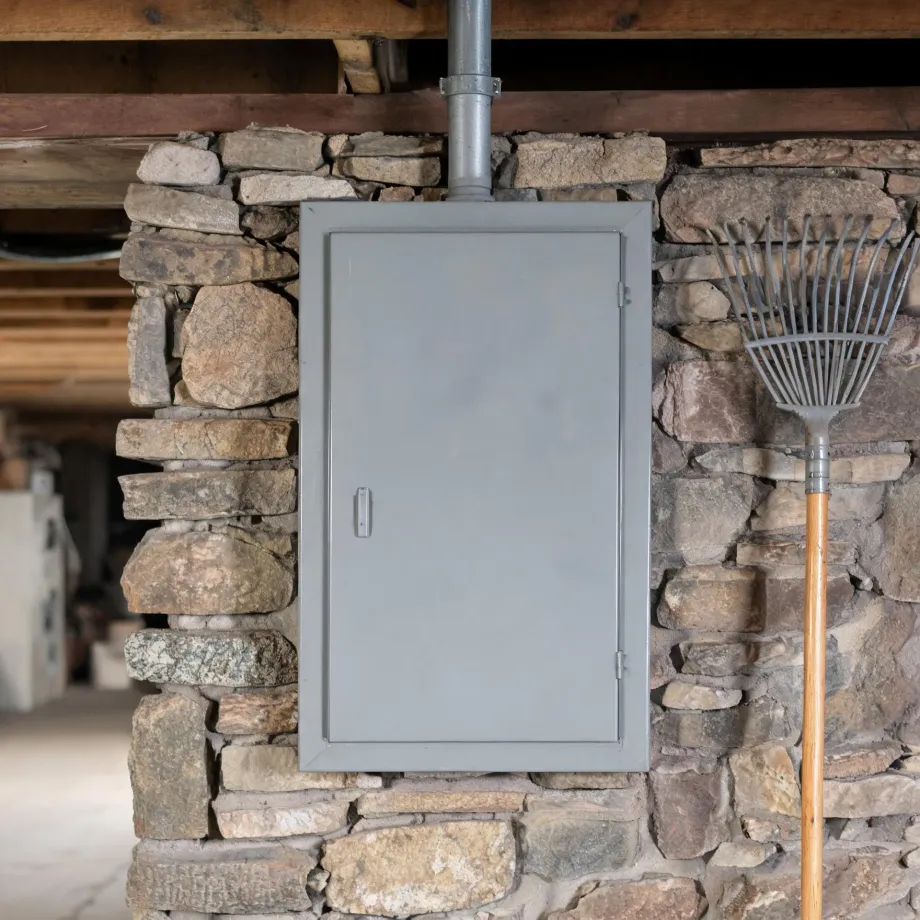
Ductwork in houses of this vintage was sized and routed for whatever heating system was original to the building, and a heat pump moves air differently than what most of those systems required. Half the homes in Essex County, Vermont were built in 1973 or earlier (2020-2024 ACS 5-year). A contractor quoting an installation here has to open registers, trace trunk lines, and check whether the existing duct layout can carry the volumes a heat pump needs before the equipment selection means much. Electrical service gets the same look: older panels were not built for the draw a modern heat pump puts on a dedicated circuit. The age of the structure sets the agenda for the site visit.
What Gets Installed With a New Heat Pump
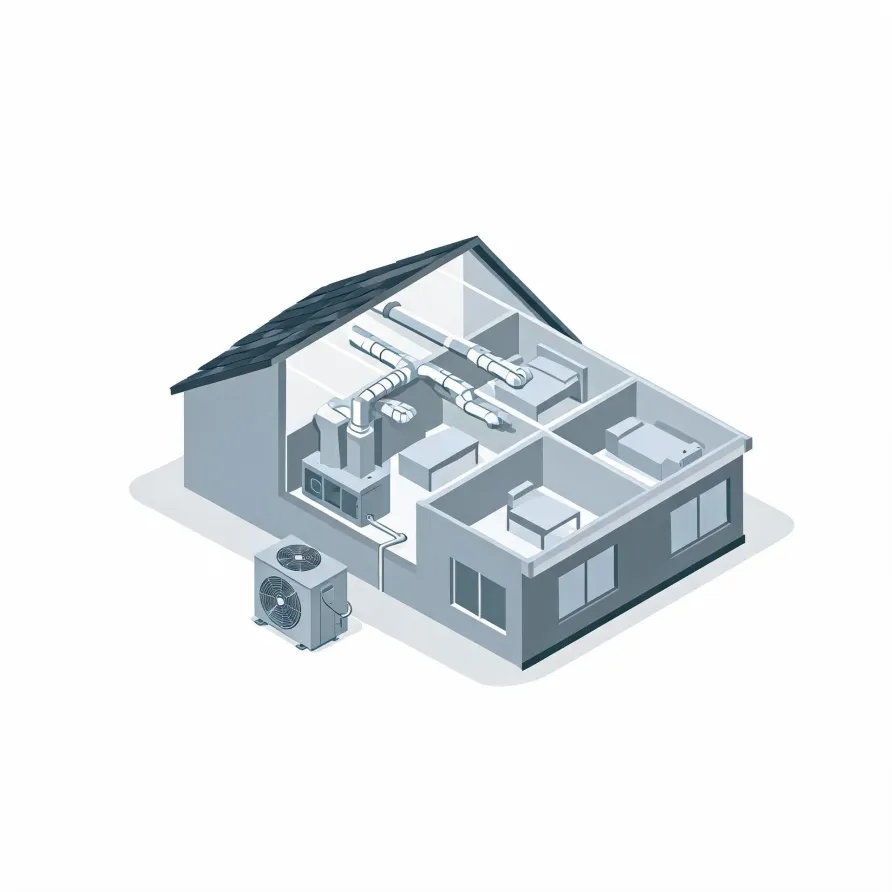
The outdoor unit is the piece a homeowner sees first, mounted on a pad or brackets against an exterior wall. Inside, an air handler or wall-mounted indoor head delivers conditioned air directly into the living space. Each indoor unit connects to a specific zone, so a contractor places them where the house needs coverage.
A refrigerant line set runs between the outdoor and indoor units, carrying the working fluid through insulated copper tubing. A condensate drain line exits near the indoor unit to carry off moisture. The thermostat or control panel, mounted on an interior wall, ties the whole system together and gives the homeowner a way to set temperatures by zone.
The drawing shows a typical layout, and a licensed contractor determines exactly which components and configurations apply to your home.
Find a contractor in Essex CountyEssex County, Vermont, by the numbers
76 severe weather events were recorded in Essex County, Vermont between 2015 and 2024.
NOAA National Centers for Environmental Information, Storm Events Database, bulk CSV export, events 2015-01-01 through 2024-12-31.Half the homes in Essex County, Vermont were built in 1973 or earlier (2020-2024 ACS 5-year).
U.S. Census Bureau, 2020-2024 American Community Survey 5-Year EstimatesEssex County, Vermont holds 4,952 housing units (2020-2024 ACS 5-year).
U.S. Census Bureau, 2020-2024 American Community Survey 5-Year EstimatesOwners occupy 82.4% of the occupied homes in Essex County, Vermont (2020-2024 ACS 5-year).
U.S. Census Bureau, 2020-2024 American Community Survey 5-Year EstimatesCodes & Standards for Heat Pump Work in Essex County, Vermont2 sourced rules and standards
What Essex County, Vermont Requires for HVAC Work
Vermont splits the trade across two specialty licences and a contractor may hold one without the other: field A1 covers automatic gas or oil heating including geo-thermal and ground source heat pumps, and field C3 covers refrigeration or air conditioning including air-to-air heat pumps.
Vermont reaches HVAC work through its electricians’ licence rather than an HVAC licence, and the requirement stops at the front door of a house: anyone performing electrical work in Vermont must be licensed as an electrician unless the work is in a residential building containing two or fewer dwelling units.
Severe Weather Events in Essex County
Extreme weather puts a direct load on heating and cooling equipment, and how hard a heat pump has to work is shaped by what the local climate actually delivers. That makes the weather record for this area a real factor in sizing and installing the right system.
76 severe weather events, 2015–2024. Source: NOAA National Centers for Environmental Information, Storm Events Database.